
Attendance, $80–$180
The Sydney-standard call-out fee. We name ours on the phone before you commit to anything, hold anyone who won’t to that standard.
When water is coming through the ceiling, the useful question is not "who opens at eight", it is "who answers now". We do. Around the clock across Box Hill, a licensed plumber picks up, talks you through making it safe, and gets a crew moving.
Here is the test we give callers: is it spreading? Water spreading through a ceiling, waste rising in a floor drain, gas reaching more of the house: spreading problems are emergencies, because every hour of waiting is added to the repair bill. Static problems, a drip into a bucket, a slow drain with a second bathroom available, can usually sleep until daylight rates. Tell us what you see and we will sort it into the right column honestly.
The other half of the job happens before we arrive. Whoever answers your call talks you through the shut-off that stops the damage, the meter valve for water, the cylinder valve for a failing tank, evacuation and 131 909 for gas, so by the time the van reaches Box Hill, Rouse Hill, Nelson, Annangrove or anywhere across the Hills District, the situation is stable and the repair can start instead of the triage.


The single most common emergency in a new estate is not a plumbing failure at all, it is building material that went into the line during construction and has been gradually collecting waste around it ever since.
Box Hill’s new estates are still settling in, and sand, mortar and building rubble washed into fresh pipework is a leading cause of early blockages here.
Sand, mortar, grout and offcuts do not flush. They settle at the first low point and narrow the line until an ordinary night's use finally closes it. One proper clear usually ends it permanently, which is why it is worth doing thoroughly the first time.
Properties on septic or an on-site treatment system have a failure mode town sewer does not: the problem can be the system itself rather than the pipe to it, and the warning signs are wet ground and smell rather than a backed-up fixture.
On Box Hill’s remaining acreage and rural-fringe blocks, long private drains and septic systems need cameras and the right access to clear and inspect properly.
If the ground over the trench is soggy in dry weather, stop putting water into the system and call. Continuing to load a failed field turns a pump-out into an excavation, and that is the difference between a bad evening and a bad month.
A drain on a slope moves water fast, and fast is not always good. Waste can outrun the liquid carrying it on a steep run and settle at the first flat section, building up at exactly the same spot each time.
Freshly graded estates around The Gables shed a lot of runoff, and heavy Hills rain quickly overwhelms new stormwater pits that silt up and back up.
The tell is a blockage that recurs at the same interval in the same place. That is a gradient problem, not a usage problem, and no amount of careful flushing fixes it: the answer is to see the profile of the line and correct the section that is wrong.
A yard that floods in every serious downpour is a different problem from one that flooded once in a freak storm. The first is a blocked or undersized line and it will keep happening; the second is weather.
Telling them apart takes a camera on a dry day, not a guess in the rain. If it has happened twice, book the inspection between storms, clearing a surcharging pit at the height of it costs more and tells you less.
On a newer home this question is worth asking before anyone starts work, because the answer can be worth thousands. Defects in workmanship are typically covered for a period after completion; blockages from ordinary use are not.
Rapid subdivision means some PVC lines were laid in a hurry, sagging, dips and bad falls trap waste and cause repeat blockages in newer homes.
What settles it is evidence. We record what the camera shows and describe the fault in terms a builder or insurer can act on, a displaced joint, a fall out of tolerance, debris from construction. You may still choose to have us fix it tonight; the documentation is what lets you recover the cost afterwards.
If it is happening right now: stay out of moving water, lift what you can off the floor of the garage, and clear any grate you can reach safely from dry ground. Do not lift a surcharging pit lid, the water underneath is moving faster than it looks.
Once the rain stops, the pit that overflowed usually has a reason, and it is rarely the rain. Silt, roots or a collapsed section will do it, and the difference matters because one of those is a clean-out and the others are a repair.
The Sydney-standard call-out fee. We name ours on the phone before you commit to anything, hold anyone who won’t to that standard.
Business hours runs roughly $120–$160; after-hours sits higher because a licensed plumber is out of bed for you.
Call-out plus early labour plus minor parts covers the bulk of real after-hours jobs: bursts, blockages, failed valves.
Under-slab leaks, gas line faults, anything opening walls in the small hours. The number is agreed with you first, always.
Contained, isolated, water off? We will tell you it can wait and book daylight rates. Honesty is cheaper than urgency.
No number is invented after the fact, you approve the price before work starts, 2pm or 2am. Figures here are indicative of the 2026 Sydney market rather than a quote from us, you get your own number as a fixed price before any work starts.
The person answering can actually help: what to shut off, whether it truly needs tonight, and a straight ETA for Box Hill.
Emergency vans carry the usual suspects, pipe, valves, hoses, drain machines, because a fix that waits for a supplier is not an emergency fix.
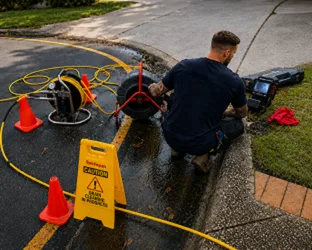
Damage stops first. Then the repair is priced, fixed, and you say yes or no with the number in front of you.

Almost always completed on the spot. Where a genuine part order is unavoidable, you are left sealed, safe and running until it arrives.
Two minutes describing it on the phone settles it. Genuine hold-overs get booked at daytime rates, genuine emergencies get a van.
Phone is fastest at any hour. Form enquiries after dark ring through to the on-call plumber, not an inbox that opens at nine.

Leave your details and our local Box Hill team will call you back fast.